South Africa Elections
What to know about the Elections in South Africa
On Wednesday 8 May 2019 in democratic South Africa elections were held for the sixth time since 1994. May 8 was a public holiday and the election stations were open from 7am to 9pm.
With a population of almost 58 million South Africans, more than one third of the people were expected to cast their vote for the new government. The independent elections were held in the 25th year after the abolition of the apartheid regime in South Africa.
South African Elections 2019
Main political parties, their leaders, slogans and promises
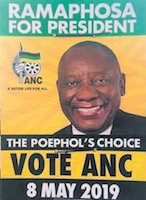
ANCAfrican National Congress "Let's grow South Africa, Together" |
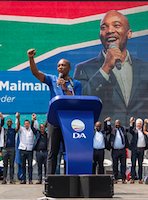
DADemocratic Alliance "One South Africa for All" |
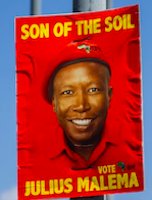
EFFEconomic Freedom Fighters "Our Land and Jobs Now" |
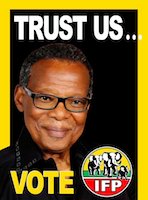
IFPInkatha Freedom Party "Trust Us" |
All South Africans from the age of 18 have the right to vote, but must register to do so. About 35.9 million people in South Africa were eligible to register for the elections.
In 2019, roughly 26.7 million of all South Africans were registered with the IEC. This means about 9 million South Africans, which is about one quarter of those eligible, did not get registered.
74.% of the eligible population registered to vote, this is down 6% from the registration quota of the last elections.
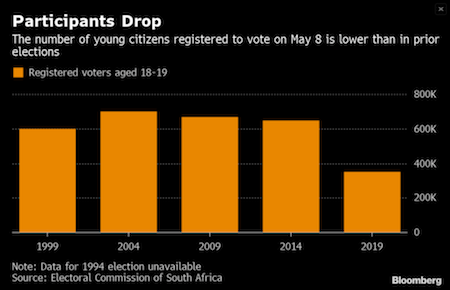
Most of the roughly 700,000 new registrations in 2019 were of young voters who will vote for the first time in their live. Still there is lots of apathy among the first time voters of which many are still at school or unemployed. South Africa's youth unemployment rate stands at an all-time high of 54.7% (2018/Q4).
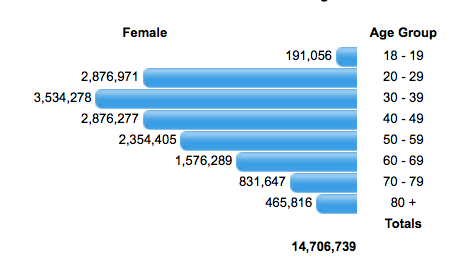
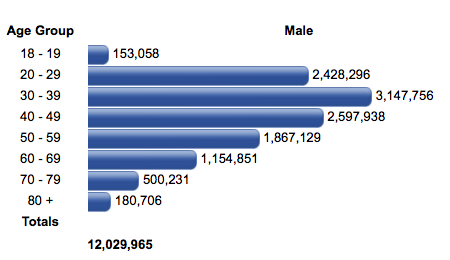
More than half of the registered voters (53.9%) of the registered voters are 40 years of age and older. About 55% of the registered voters are women.
In the 2019 elections, a record number of 48 political parties will take part in the elections and contest nationwide for the seats in the National Assembly of the South African Parliament. In 2014, there were 29 parties contesting for the seats. Find more info about the main parties here.
The two major parties are the African National Congress (ANC), headed by current South African President Cyril Ramaphosa and the major opposition party Democratic Alliance (DA), headed by Musi Maimane.
About the national elections in South Africa
The first democratic elections after four decades of Apartheid ruling were held in 1994, when Nelson Mandela became South Africa’s first democratically elected president. National elections are held every five years. In 2019, South Africa celebrates 25 years of democracy.
In the South Africa elections, the South African people decide with their two votes which party will gain the most seats in the National Assembly and which party will have seats in the provincial legislature of the province they live in. Thus, with their votes they elect only their preferred party as the new South African president will be nominated at a later stage by the party winning the majority of votes.
The South African president is thus elected every five years by the National Assembly and the National council of the nine provinces. The South African parliament consists of 400 parlamentarians which were voted into their seats through the public elections.
During the elections, there were more than 300 international observers who had a watchful eye on the polls and declared the elections fair, free and transparent.
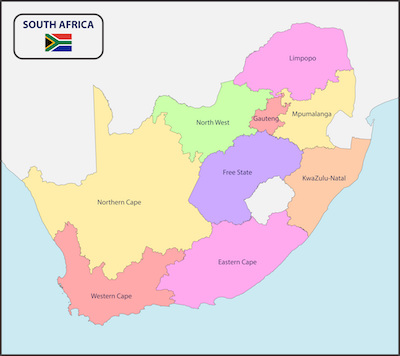
The provincial elections in South Africa
There are nine provinces in South Africa. Elections will not only be held for the National Assembly and as such for the new president of the country, but also for all provincial leaders on 8 May 2019.
The provincial elections will determine which political parties will govern the provinces. Hotly contested will be the elections in the Western Cape, the Northern Cape and Gauteng provinces. The Western Cape is currently only province led by the national opposition party, the Democratic Alliance. The DA's proposed new premier will be Alan Winde. Read more about the 'battle for the provinces' here.
South African expatriates: Election Results
How did the South African expatriates living abroad vote in the 2019 elections? It will be interesting to see if again the out-of-country results, counting all the votes cast from South Africans abroad, will look differently to the votes cast in South Africa.
The majority of South Africans living abroad have voted the DA into power with 84% in 2019. Only a small minority of SA expats 8.32% voted for the ANC to stay in government. The third placed EFF only was supported by 1.81% of the South African expatriate voters.
For the first time in 2009, South African expariates living abroad were able to cast their votes at the foreign missions. Of the 9857 South African abroad who voted at these foreign missions. Then the opposition party DA won 75% of the votes.
The topic of national elections and a change in the cabinet always creates insecurity among many population groups in regards to the future direction of a country. An article published by the Cape Argus on the day after the previous elections in 2009 gave a dire picture of the support of the South African people who took part in their readers' survey:
Of the total votes 59% are ready to pack and go (24%) or have already left (33%) and only 41 % are prepared to come home now (8%) or are alright with the current situation (33%).
More to read about the South Africa Elections 2019 - South Africa Election Resources
- Mail&Guardian: Record number of political parties contesting in the 2019 elections
- Moneyweb: Party election manifestos are a collection of fantasies
- Statistical Facts by BBC: South Africa elections: Charting divides 25 years after apartheid
- The Guardian: South Africa Election: Everything you should know
- And for some speculative thoughts: Daily Maverick: Is this the 2019 Election result?
- Elections 2019 Candidate Lists, Registration Information and Statistics
- AfricaCheck: Election Manifesto Factcheck: ANC, DA, EFF
South Africa Election Results 2014
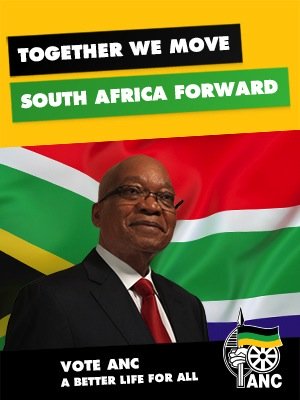 Jacob Zuma Jacob Zuma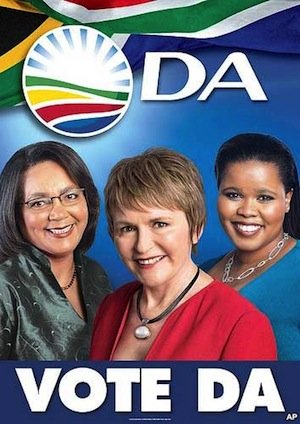 Helen Zille Helen Zille |
In 2014, roughly 25.4 million of all South Africans registered with the IEC. Almost half of the registered voters (49.7%) were under 40 years old. All South Africans from the age of 18 have the right to vote, but must register to do so. About half of the population registered in the 2014 elections which constituted the highest number of registrations since the first democratic elections in 1994. In the 2014 elections, a total of 29 political parties took part contesting nationwide for the seats in the National Assembly of the South African Parliament. The two major parties are the African National Congress (ANC), headed by President Jacob Zuma and the major opposition party Democratic Alliance (DA), headed by Helen Zille who is also the premier of the Western Cape. ANC: 62.15% - DA: 22.23% - EFF: 6.35% - IFP: 2.4% All other 25 parties were under 1% and of these only 9 managed to have the minimal votes to gain a seat in the national assembly |
In the National Elections in 2014, the majority of the votes was won by the ANC, dropping from 65.9% in the 2009 elections. In 2009, the strongest opposition parties were the DA (Democratic Alliance) with 16,6% and COPE (Congress of the People) with 7,4%who was formed mainly by former ANC politicians who split from the party due to infighting in 2009, however COPE lost tremendously over the last years and only reached less than 1% of the votes in 2014.
In the Western Cape, the Democratic Alliance won the provincial elections 2009 for the first time with an overwhelming majority of 51,4%. The ANC lost a huge number of votes and got only 31% of the ballots in 2009, however, gained slightly again in 2014, reaching 34%. Helen Zille, the opposition leader of the Democratic Alliance, who then was the mayor of Cape Town, is still today the premier minister of the Western Cape. The Western Cape is in 2014 still a stronghold of DA supporters with an increased support base of 57% of the population.
More on the Elections in 2009
In 2009 there were 19,700 polling stations across South Africa, the voting districts were so different, that some stations were so small with only 6 registered voters and some expected thousands of South African. The polling stations had to be opened longer at some places as there were long queues of people who had not voted by the time the stations were supposed to close.
The Cape Argus called it therefore "The all-night election". 23 million voters registered out of the South Africa's 49 million inhabitants. In the Western Province with Cape Town as the capital 73% of the 2.6 million registered South Africans had voted by 10.55.pm. The voter turnout was high in many places again. In Cape Town which is the biggest voting district in the Western Province 77% cast their ballots.
- Where to get the past South Africa elections results? Take a look at the IEC (Independent Electoral Commissions) Homepage .
- Get more insights into the topicSouth Africa elections at this special independent elections guide with media analysis supported by the Times
Popular Posts